Telahus Maris
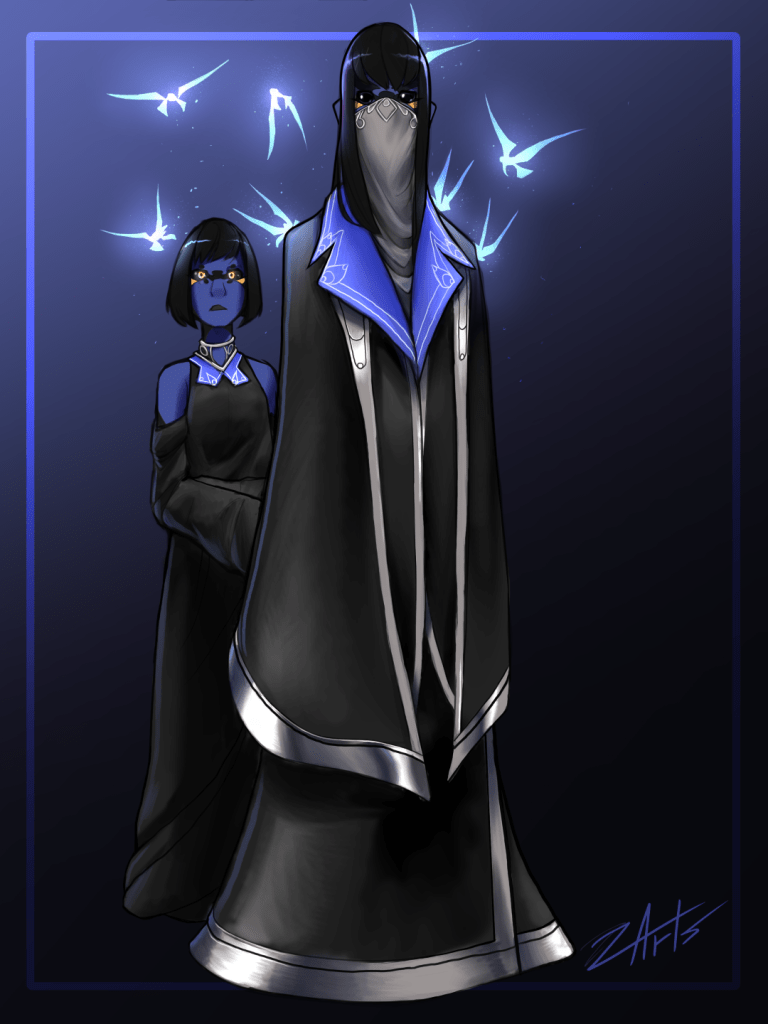
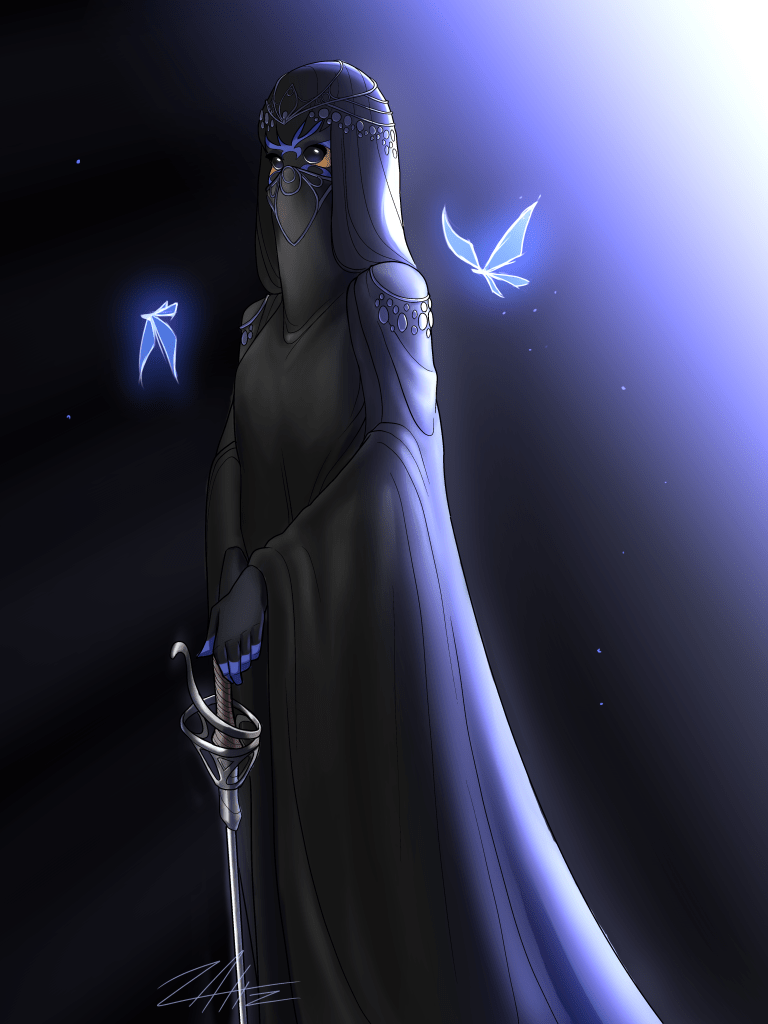
“The picture of mystique and grace, just not one for our eyes. Quite literally, I’m afraid. Were you to gaze upon one of one of these beings, even in a private setting, her Quodilus entourage would infiltrate your NIF and shut off your eyes… they’re take their faith quite seriously.”
- TC#: 37
- TC Name: Homo Maris Major
- Common Names: Telas, True Maris
- Launch date: 2264
- CIT: 3
- Population: 305
- Reproduction: Yes
- Sex: Femme Optale
- Lifespan: ~100
- Avg Height: 167cm
Origin and History
The Maris project was officially started under the name Project Aquarius in 2238, by Aquarius Transcended Solutions. The project goal was to provide an amphibious hominid to both Sol-based and, eventually, interstellar markets. Private markets weren’t necessarily the goal of Project Aquarius, as the prototypes envisioned would far exceed the price of most designer babies.
Aquarius Transcended Solutions pursued an iterative design process to their genome. Micro design processes interspersed major design updates. The company produced four of these major design phases before creating the modern Quodilus.
Prior to the Tichordia Concord, Quodilus sold poorly, and Aquarius Transcended hardly recouped their losses on the 5th iteration Maris. Financial concerns prompted the redesign and early release of the 6th generation Maris, Telahus, yet both generations were in production at the time of the Tichordia Concord and therefore the stipulations of the gene freeze applied. Both generations were official recognized as Class-A genomes and therefore granted species rights. This was especially significant for the Quodilus, as they were not designed to be capable of reproduction. A Concord directed production laboratory was established on Haumea to facilitate species continuity.
The first generation Telahus however, had already given birth prior to the gene-freeze and the reproduction cycle of the species was already studied and mostly understood. The stage was set for the Telas to thrive in this post-commercial gene world.
Biology
The ideal Maris was intended to be a fully amphibious, cybernetically optimum, long-lived, survivable species. The Telahus was a step towards this ideal, more so than the heavily cybernetic Quodilus.
Telahus have a moderate level of biosynthetics and cybernetics (CIT level 3). Their neural augmentation allows them to use the same communication methods as their Quodilus kin while also retaining sophisticated thought processes.
Telas have a form of cutaneous respiration. It functions at reduced efficiency in atmosphere, as the feature was designed for liquid medium. This capability makes Telas quite comfortable in the water, though they cannot breath this way indefinitely. The average Telahus can remain submerged at depths up to 25 feet for 8-12 minutes.
The Telahus trachea was purpose-designed for later modification. Between the 5th and 6th generation Maris, Aquarius was developing gills that would feature on the 7th generation. The integration was never completed. Even if it had been, the Maris would still be without functional vocal cords. Aquarius prioritized aquatic respiration over traditional vocalization.
As with all transhumans in development during the twenty third century, aesthetics played an important role in branding. Telahus were pigmented with traits from royal blue tang and various poison dart frogs.
The external ear was retained from baseline, though the interior ear was changed to incorporate underwater dwelling between 2-8 meters. Telas also have a series of audible sensors around the cranium that are designed to interpret noises underwater.
A prehensile tongue was incorporated to assist with underwater feeding. Telahus were designed with variable growth mandibles, using an oral philosophy of simplification. The single, segmented, synthetic ridge on the top and bottom jaw changes with dietary environment and age. A similar growth augment exists in the fingertips and toes.
Telahus are femme optale (female based, induced hermaphrodites). It takes about 10 months to sequence to male once the change is initiated. Male gametes are produced for about three months before the process reverses without intervention. Most Telas identify as female, even during male cycle.
Culture and Demographics
Spirituality
The Maris religion was never intended by Aquarius. The entire culture of the Maris was a consequence of timing and genetic iteration. At the time of the gene freeze, the 5th generation Quodilus already held the 6th generation Telahus in high regard. Likewise, the Quos embodied the initiatives of the Maris project. They looked to the watery exoplanets beyond Sol and saw hope for a prosperous future.
Quodilus, being incapable of reproduction, required gestation and growth in a Concord mandated production facility at Haumea. The price of an individual Quo is significant, too much for the Kuiper Alliance to fully subsidize on a mass scale. It fell on the independent Telahus, who tended to inherit wealth after the gene freeze, to help fund the creation of their kin.
This early dynamic quickly evolved into the Maris social and spiritual stratum. Modern Quodilus are created at the whim of influential Telahus, usually in batches. Those quodilus, in turn, are indentured to that particular Telahus in a lifebond. The Telahus then fill the clergy, academic and leadership roles within the Theocracy, while the Quodilus undertake the clerical, bureaucratic and domestic roles. Despite what many outside critics claim, the relationship is mutually agreed upon and Quodilus willing accept Telahus leadership. Telahus, likewise, cherish their Quodilus congregations, treating every Maris life as sacred.
A widely held misunderstanding protests that the Maris religion exists to enforce a status quo. The actual basis of the faith is preparing the Maris for an interstellar future, to include genetic convergence towards an ideal Maris form. The faith therefore, like many other transhumanist faiths, suffers from a post gene-freeze dilemma. The Tichordia Concord permits the continued existence of the Maris in Sol, but prevents the species from developing any further.
Piety and Grace
Due to their revered status amidst in the Theocracy, the birth and development of a Telahus is considered religiously significant. The Theocracy will closely follow the growth and schooling of a young Telahus and ensure she is prepared to lead and administrate within the Theocracy. As a representative of the future of the Maris, Telas are raised to be majestic, pious and wise.
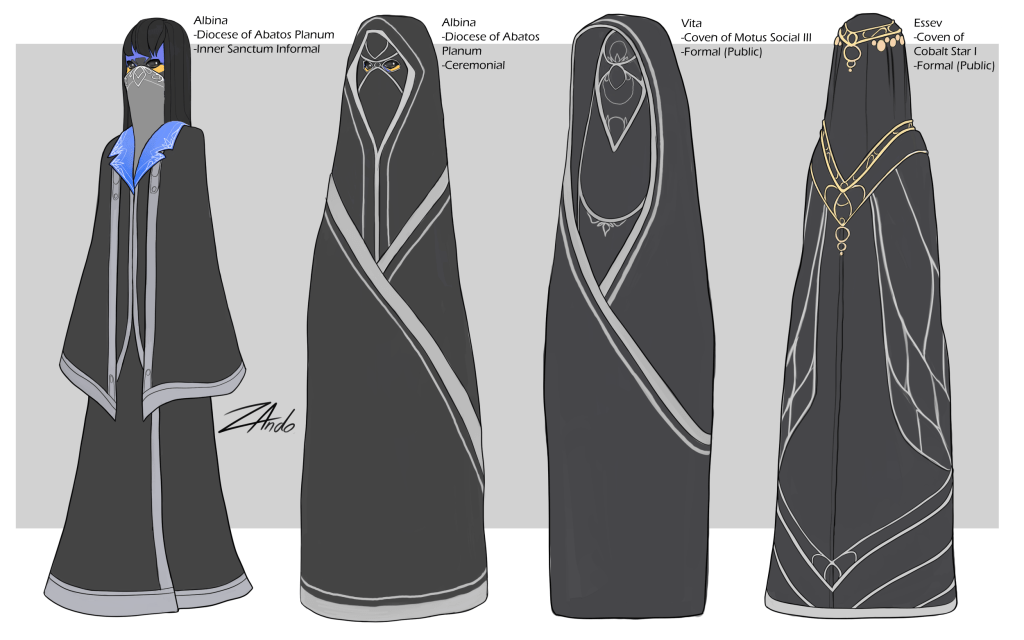
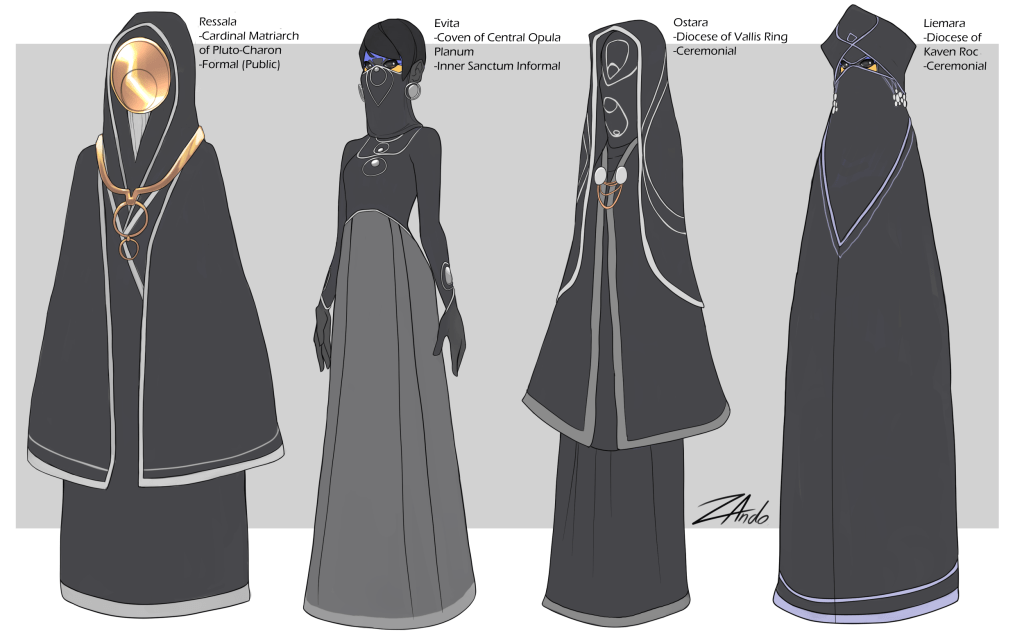
Additionally, the Maris believe the company of the Telahus to be sacred, as it is far closer to the Maris ideal. Non-Maris are considered unworthy to lay eyes upon Telahus. The Maris go to great lengths to protect the Telahus visage. The traditional religious garb of the Telahus is a niqab, usually black or very subdued blues, often with silver or white metallic accoutrements and trim. Common iconography on all Maris outfits include the Azure Star, the Diameter (colloquially known as the dreamcatcher, or a Neptune dreamcatcher) and constellations. If not incorporated into the niqab, these icons may be included as somnoptic projections. The outfit signifies not only the pious and reverent nature of the Maris but also the sanctity of the Telahus design.
As a final protection to the Telahus image, Quodilus may aggressively hack into the eyes of onlookers to censor the face of their Telahus.
Solemnity and Solitude
Because the Telahus are few in number and space is very large, the subspecies is very diffusely distributed. It is uncommon that Telahus encounter each other in large groups. A coven, which may cover the jurisdiction of an entire orbital, may be presided over by a single Telahus. Therefore, the meeting of two Telas is sometimes a very ceremonial affair, and courtship rituals can be elaborate.
Communication
Telahus were intended to communicate electronically. However, a form of fluid-based syntax evolved shortly after deployment of the genome. Telas will stimulate a virtual fluid medium, typically in an somnoptic projection, to communicate visually with each other. Interpreting the visual medium is beyond the capability of almost all non-Maris.
The Maris consider it mildly offensive to be spoken to, instead preferring an electronic ping of greeting. Touching is taboo in Maris culture.
Population
Telahus, like their Quodilus counterparts, are one of the least dispersed gnomes recognized by the Tichordia Concord. With 305 individuals as of the 2373, Telas are designated critically endangered by the Concord. However, their numbers are increasing steadily.
Notable Individuals
Lady Albina of Abatos Planum – While the Maris have cordial relations with the First Light of Sol, Albina is one of the most predominant advocates within the Theocracy. She regularly attends conferences in the Neptunian sphere and lends her substantial resources to the Disciples, especially when it pertains to interstellar expansion.
Legatus Coveness Ressala of Pluto-Charon – The Great Maris archivist. Ressala repurposed the Grand Wing of her Cathedral to storing hard documentation of human history. She guides a small legion of Quodilus scribes who transcribe digital information into physical medium. The Pluto-Charon Cathedral is considered one of the many great archives of Sol
Cardinal Monarch Ovila of Haumea – Ovila guides the largest coven of the Maris with 470 Quodilus and 8 Telahus.
Lady Trissa of Onyx – Trissa is the prime director of Klaris Von Optical, the 2350 Kuiper Expedition. The Klaris Von settlement and mega telescope is on schedule to be completed in 2375, at which point Lady Trissa will make a visit and become the farthest travelled Telahus in history, at about 122 AU.
 Hibour