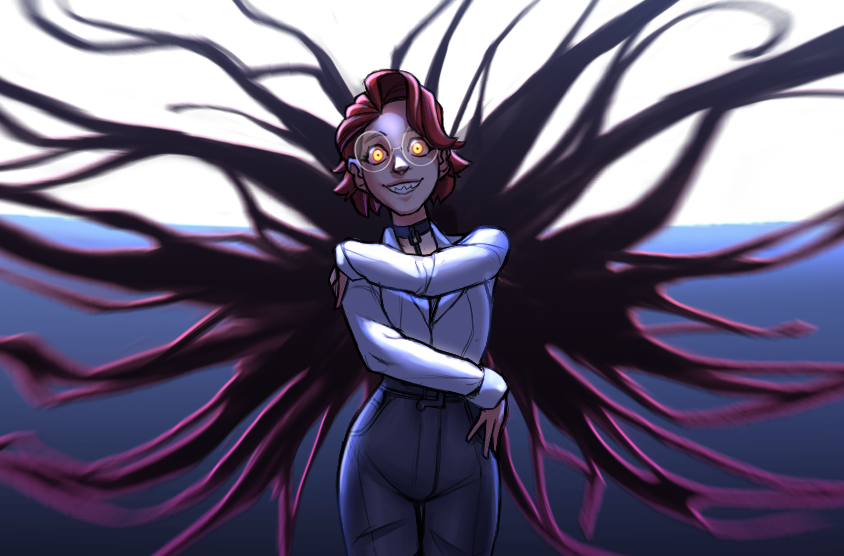
Ostoros 4
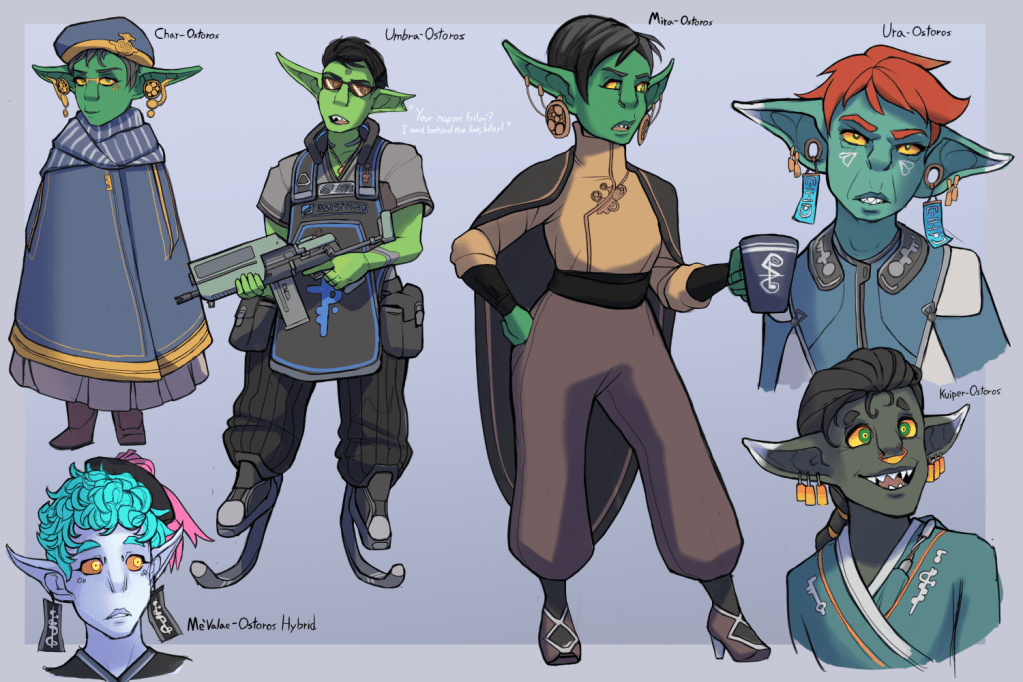
The hybrid set down her tablet with effort, having to reach up to the standard height desk to slide it on. “Not to make to fine a point about it, bitsy-” she started in remarkably well practiced Anglohik. She crossed her arms and somehow managed to look down upon you, despite being four heads shorter. “But this office could use some accessibility features…“
- TC#: 22
- TC Name: Homo Improcerus
- Common Names: Goblyns, blyns, gobbies, gobettes
- Launch date: 2262
- CIT: 2
- Population: 98,000
- Reproduction: Yes
- Genders: Male, Female
- Lifespan: ~85
- Avg Height: 89cm
Origin and History
The twenty third century had some truly unique transhuman markets. Ostoros Unlimited Solutions chose to enter the competition with a small biotype with industrial and space travel application. It started with the unsustainable Ostoros 1 and 2, which were only produced in single digit numbers as proof of concept. Ostoros 3 was scale deployment genome that ran commercially for 6 years. Ostoros 4 first released to the market in 2262 as a controlled trial. Ostoros 3 was retired from work services in 2264, the same year that Ostoros 4 went into full production. The line continued until 2276 with the establishment of the Tichordea Concord.
The Goblyn genome, like many others, is the subject of controversy. The genome was marketed as a pay-and-plug laborer at a time when outer solar system companies were desperate for workers. The original gestation contracts did compensate Blyns for their labor, but not at any substantial amount. Additionally, Blyns under contract lived and worked at the whim of their employers, typically for a period ranging from 30-40 years. At the time of the Tichordia Concord, no living Blyn had yet completed a work contract.
The original rollout of Ostoros 4 targeted five major markets. The Pluto-Charon system, Umbriel, Miranda, high orbit Uranus, and the deep space Kuiper Alliance. Ostoros accurately assessed that all of these spheres had a high demand for specialized workers with small resource footprints. The efforts of the company resulted in 5 distinct subcultures of goblyns, all with specific regional traits.
Biology
Blyns are short in stature, averaging about 89cm. Hands and most sensory organs were kept large in an effort to ensure compatibility with a human interfacing technology. Exaggerated, tapered earlobes were designed to fit both an aesthetic archetype and to provided secondary vestibular organs within the cartilaginous helix. Like nearly all transhumans, the eyes are biosynthetic and grow with with the individual.
Goblyns mature at 6-8 years and most are considered fully grown by 10. Their small stature means a lower caloric requirement and better use of volume in a spacecraft. As with most transhumans genomes, they are very resistant to disease and cancers. Advanced sinus and nasal design were incorporated for improved respiration in low gravity environments and during heavy workload.
Blyns were not designed to reproduce easily. Worker population control was a marketing feature and therefore goblyn fertility rates are abysmally low without specifically formulated hormone supplements. Prior to the Tichordia Concord, Ostoros was the sol producer of blyn supplements. Now the drug is produced, controlled and regulated by the Blyn Highmancy.
Culture and Demographics
All five blyn subcultures harbor distinct traditions that were developed in the early years of servitude. Almost everything that lends itself to blyn culture can be traced back to indentured servitude in the outer solar system. Communal family groups, cooperative.
Many goblyns, especially those of Uranian heritage, speak a creole of Bosti and Ceres Bosti called Uratoli. This language developed during the early years of blyn servitude, prior to the Concord, and was continually used for decades thereafter. The tongue is far enough removed from traditional forms of Bosti that it’s not easily deciphered by most Bosti speakers.
The name Callabi or the phrase nebrei Callabi (remember Callabi) appears often in blyn culture. It refers to the Callabi revolt of 2278 at Miranda in which 91 blyn workers were slaughtered defending their homesteads from corporate security, backed by the newly formed Kuiper Alliance. The event is considered a serious misstep by the early Alliance and still represents the most concentrated loss of blyn life to date. The anniversary is remembered well.
The Blyn Highmancy is a species exclusive, culturally distinctive, transnational entity that pursues blyn rights on the solar system stage. Though typically categorized as a humanitarian group, the Highmancy actively campaigns in outer world politics both in and out of the Kuiper Alliance, pursing rights for laborers and social welfare, especially as they pertain to goblyns and other historically marginalized transhumans. Some governments, such as the Galilean Federation, categorize the Highmancy as an extremist group due to a few high profile incidents in the last century that were apparently carried out in the name of the Highmancy, though the organization denies any involvement.
The Concord derived name for Ostoros 4 is Homo Improcerus, but the Goblyn community actually considers the term imp to be derogatory. This has some social implications, as other transhuman subspecies proudly use the term imp, such as Melkines.
Notable Individuals
Kakkiri Allure – Founded Allure Propulsion Solutions (APS) in 2309. Famous for aggressively consolidating the Uranian rocket engine market.
Tacktum Bi Heci – The Saint of Silimonte, patron of unity and founder of the Blyn Highmancy. Tacktum of Silimonte guided the Blyns of Tri-Molari out of corporate servitude
Heliue Chaktu II – Heliue with the Wings, Saint of Ambition. Heliue of Dairides was the first blyn to own a spacecraft. She dedicated her medium shuttle to the Highmancy and began humanitarian flying around the Uranian system, offering steeply discounted fares for blyns moving between orbitals. Her constellation eventually expanded to 6 shuttles before she retired and allowed the Highmancy to purchase a majority stake in her shuttle company.
Chaktos Bal – The Iron Imp, the Saint of Callabi. Patron of family and the young, Chaktos of Callabi 2 famously stood his ground against security drones at the entrance to his neighborhood in Callabi district 4. His action stalled the security response, allowing scores of blyn families to escape and provided an icon behind which the outer solar system could rally. After delaying for several minutes he was shot to death, but not before his image could be uploaded across the mindscape.
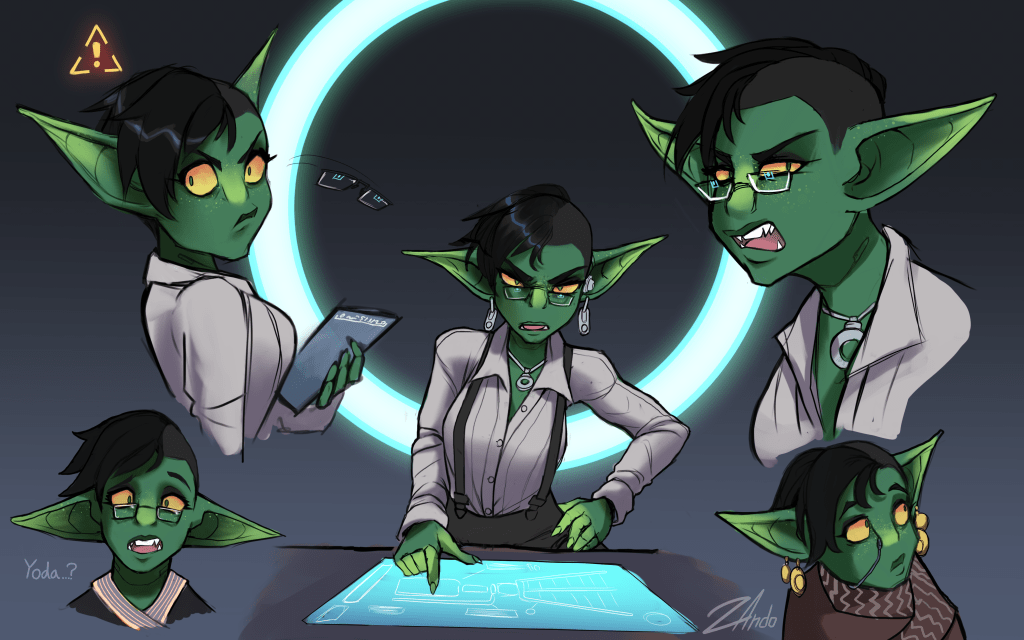
 Hibour