The Kuiper Alliance
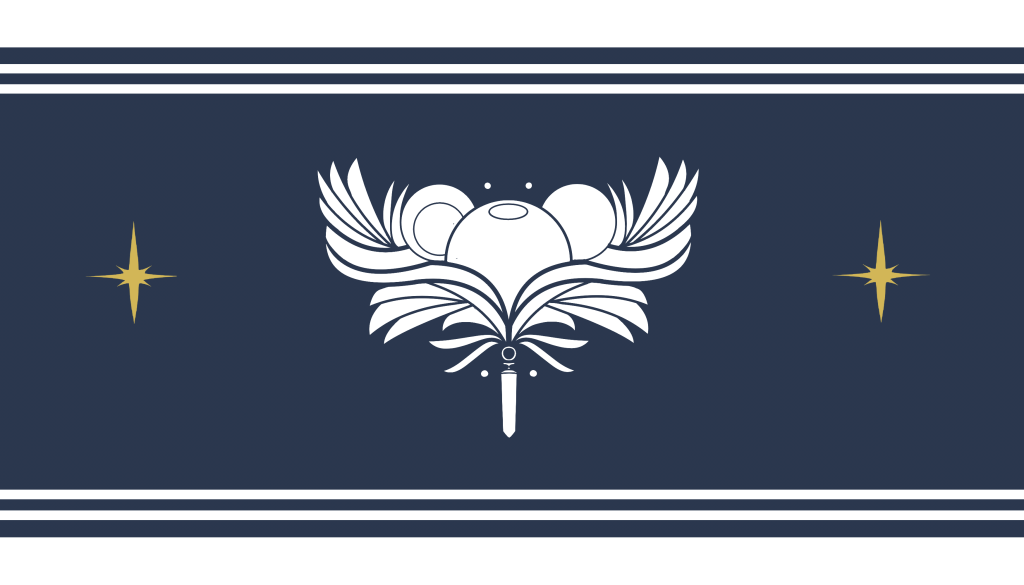
No greater expanse of human territory has ever existed, effectively spanning outwards into the scattered disc from the orbit of Neptune, the Kuiper Alliance is perhaps the most varied, diverse and enormous organization of human interaction to have ever been.
The dark, high orbits of Neptune and beyond were explored and settled throughout early spacefaring civilization, first visited by remote scientific missions, autonomous survey probes and robotic resource extraction projects. As crewed spacecraft became more advanced, the first explorers and technicians traversed the moons of Neptune and Pluto. The populations only branched out from there.
In 2224 the first permanent Neptunian orbital was completed. That same decade, free citizens were landing on Pluto, walking into machine-built settlements. While the inner solar system was rebuilding Earth sphere, growing their constellations and weathering the Jovian long dark, the outer solar system was quietly growing with a wary eye towards the shadows that cross the sunlight. Haumea, Gong, Make, Orchid, Cabal, Hythea, Eris… nearly every known dwarf planet bore human footprints by 2300 and, in most cases, a robotic construction project churning out orbital infrastructure. Even the space between worlds was glimmering with repurposed Kuiper objects, providing the next bastion for humanity in the deep sky.
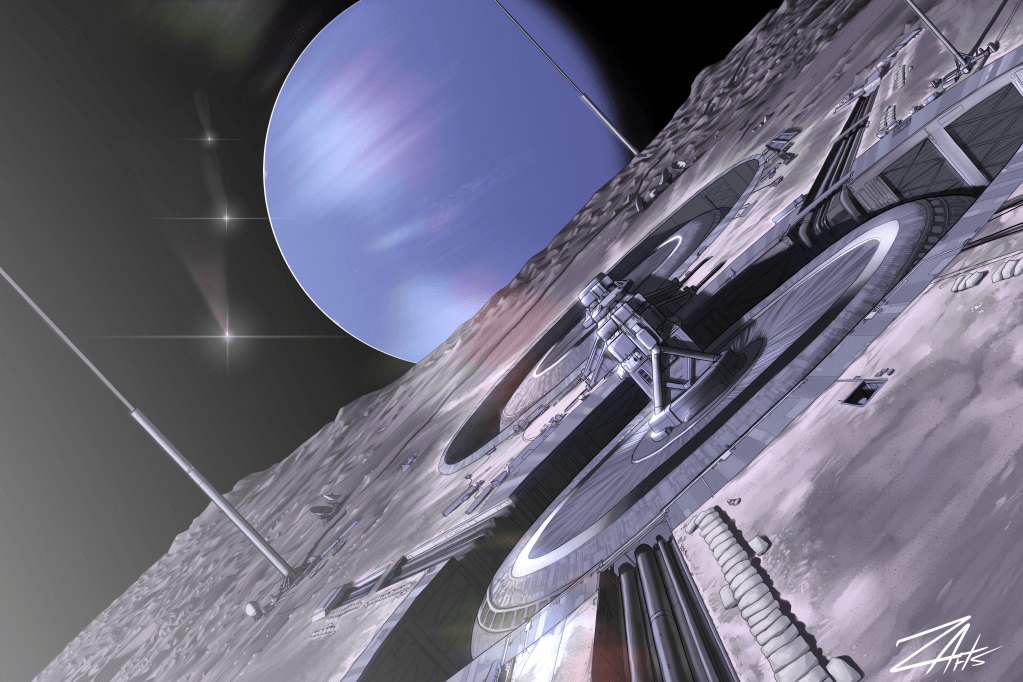
Even in the early days, a million factions governed these worlds and cities. Commercial enterprises, government projects, and private ventures thrived here. From the Republic of First World to the Galilean Federation, the latter of which had a notable stake in the orbit of Makemake. They had built Opula Make, a bold Jovian-funded establishment set to provide a Federation foothold in the Kuiper Belt.
On March 12, 2276 corporate security officer Debry Miska, in a fit of rage, executed labor protester Eskat Roa before a crowd of several hundred Makemake labors. The ensuing riot would come to be known as the Riot of Roa’s Twelfth, the inciting event behind the MakeMake Rebellion and a formative story in the early days of the Kuiper Alliance. The Rebellion would result in independence for the Make sphere, not just from Federation ownership, but also from military authority of the Republic, thus upending the centuries old grant enforcement system by which Earth governments had policed space.
Acting quickly, the Republic of the First World enacted a revision of powers to both limit the damage and ensure that they didn’t make a powerful new enemy in the outer solar system. It was a multi-faceted agreement, designed to tackle some of the differences in ideals now facing the human expanse. The governments of Luna established that the Kuiper Alliance would inherit the right to independence and self defense of their own spheres, so long as they entered a defense pact with the RFW. Additionally, it reinforced prior negotiations to enforce limits upon the growth of radical transhumanism. Thus far, the conversation had been widely stagnant, with the Republic and their vassals predominately opposed to deep gene alteration and the Alliance entirely for it.
The Tichordia Concord, as that agreement came to be known, was legislation developed between all the major space powers to curb the runaway genetic variation of baseline humanity, unofficially known as the genespree. It froze all development on commercial and private human genomes. In exchange, the Concord legislated that those genomes already living and breathing would inherit all basic human rights, including the right to procreation, which was not guaranteed to all the living populations at the time. The Tichordia Concord established a base of operations of Haumae, essentially a small government of its own, to implement the task of providing social benefits for the hundreds of thousands of transhumans already living in human space.
The Tichordia Concord was a mixed bag for the Kuiper Alliance. The commercial empires of the outer worlds could no longer rely on (or exploit) entire populations of genetically modified people for income. On the other hand, those people were now free from commercial servitude. Their children wouldn’t be any better off biologically than they were, but they would be sympathetic to the Alliance none-the-less. To this day, the Concord is seen as a sacred institution by many, the reason their people exist at all.

Territories of the Kuiper Alliance
Neptune
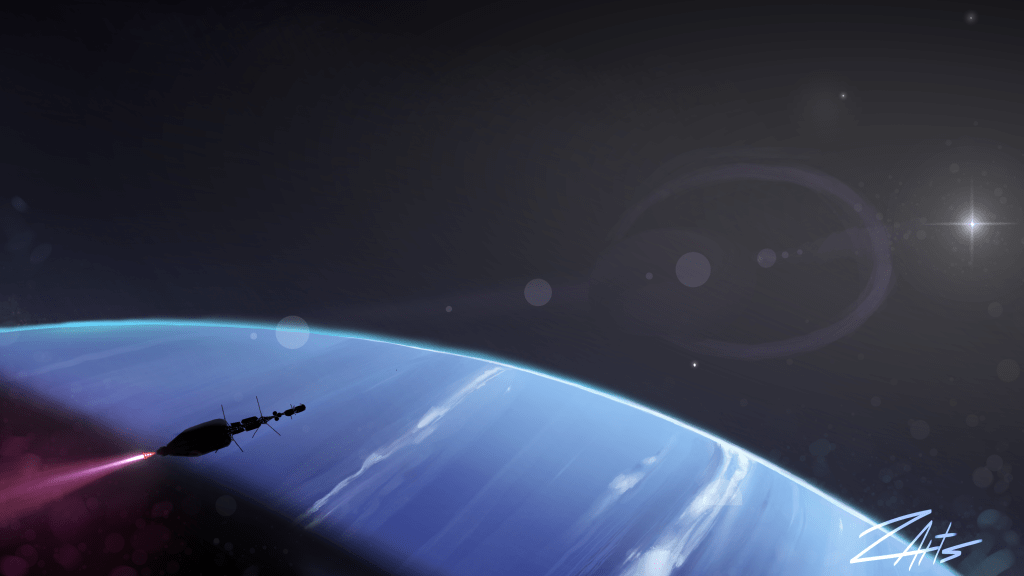
Nearly all of the Neptunian system is aligned with the Kuiper Alliance. The Neptune system is sprawling, comparable to that of Uranus, but more cohesively affiliated. Some of the most notable governances in Neptune sphere include:
- The Mercantile Republic of Proteus
- All states of the Aquasphere Polyprion, including those on Triton and the Neptunian trojans.
- Agate, Amethyst, Azurite and Amazonite, unofficially known as the Free Realms of Mediation.
- The fourteen cities of the Despara Conglomerate, including the city of Abatos Planum on Triton.
- The Tanzanite Charity, including all six Thalassan co-orbitals.
- Galatea Wake, which includes all four cities of Galatea with the exception of Gala One, which remains vehemently independent.
Pluchar

The Pluto-Charon system is another bastion of Kuiper Alliance sovereignty. But unlike the Neptunian system, Pluchar has historically been free of intervention by outside factions. Some of the most notable governing factions of Pluchar include:
- All four orbitals of the Pathosphere.
- The Lantern World Congregation
- The Union of Whisper Horizon to include all Plutonian territories.
- Rittik, though the orbital’s allegiance is often vague. It has never acted against the Kuiper Alliance and occasionally votes on matters in the Pluchar system.
- The United Kingdom of Nix
- Scaldia Consortium (all orbitals that were once Hydra)
- The Charonian Union
- All houses of the Nitrogen Cooperative and the Open Sky Guild.
Haumea

Haumea is, perhaps famously, the home of the Tichordia Concord. It holds a deep cultural significance for transhumanism and, by extension, the Kuiper Alliance itself. It is said that if the Alliance had a physical capital, it would be Haumea. The number of governing factions based in and above Haumea are too numerous to list, but all are directly represented in the Kuiper Alliance.
Orcus
The Orcus sphere consists of six orbitals, all participating members of the Kuiper Alliance. Though not unified under any central authority, the orbitals of Orcus have cooperated on a major laser station to better assist arriving and departing beam powered spacecraft.
Cabal
The Cabal sphere comprises nine orbitals and several surface settlements. The asteroid moon, Jasker, also houses two cities.
Gong
The Gong sphere consists of four orbitals, including Davenmere, the City of Ghosts. Over the last decade, these cities have sought to unify under a central government.
Hythea
Both of Hythea’s asteroid moons were deconstructed in the early 2320s to complete the seven orbitals that now share the sphere of influence.
Philos
Remote Philos hosts only one major orbital. Two more are under construction as of 2373, but the projected population for each is still miniscule.
Orchid
Icy Orchid is orbited by three major orbitals. Several warring factions govern the glacial surface, four of which are loyal to the Kuiper Alliance and one which considers itself independent.
Warzi
As of 2373, Warzi has one major orbital under construction, but a considerable amount of industry on the surface. The tiny planetoid will reach perihelion in 2405, so much growth is expected in the next several decades while the starlight holds. Lately the Kuiper Alliance has preoccupied itself with the complicated politics attempting to saturate the lonely sphere.
Make
Makemake is another sphere of high cultural value to the Kuiper Alliance. The world was the site of the first rebellion against inner system colonization efforts in 2276 when the worker citizenry of Opula Orbital ousted the Galilean Federation based corporation that founded it. The fallout of that rebellion directly influenced the creation of the Kuiper Alliance and the Tichordea Concord.
Eris
Eris, the Farworld of Humanity, was claimed by the Kuiper Alliance in 2285. It has since become the home of one of the most densely transhumanist populations in the solar system. The Erisian civilizations aligned with the Alliance include:
- The Dysnomia Collective, which includes three buried cities and Calisma, a high orbital.
- The Melathone Park, on the North hemisphere of Eris.
- All seven orbitals of the Crown States.
- The True Light of Sol maintains Snowfall, a private orbital in high Eridian orbit. While not officially a member state, the Kuiper Alliance views the transnational entity as an ally and treats Snowfall as a cultural site of humanity.
The Free Kuiper Settlements
Beyond the dwarf world systems, there are scores of deep space cities thriving in the Kuiper Belt. The majority of these factions prospected water ice and volatiles out of the rocks that eventually became their homes. There are too many to list in their entirety, but some notable examples include:
- Blea Harkon – The first true Neural Democracy
- Plague – The great Darkrealm of the Neptunian trojans
- Drifa Chroski – the prisonworld
- Victoria Beacon – The largest conservation in the solar system.
Military
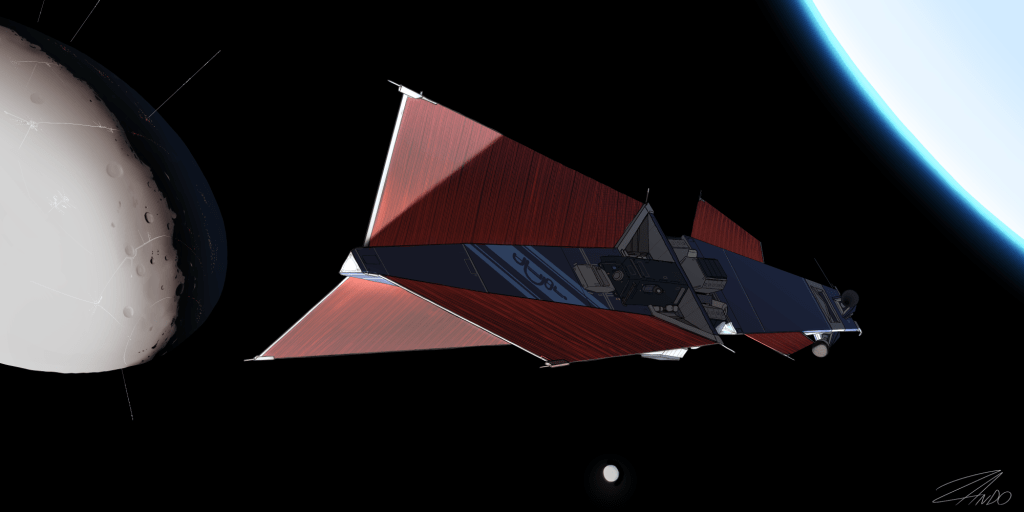
The Alliance constitutes a defense pact and little else. Unlike many other transnational groups, the Alliance provides no establishment of a transnational military coalition. Therefore, military forces in most Kuiper states consist of local enforcement, city defenses and security conglomerates like the Bysphere Vipretta. In fact, the majority of armed forces in the outer solar system belong to private and commercial entities, though even their capabilities are sparse compared to the might of the RFW or Galileans.
Standing militaries aside, there is debate on the enforceability of military doctrine in the Kuiper Alliance. Distances between spheres measure on a range of conveniently aligned but still farther than Jupiter is from the Sun to basically interstellar. Even the tremendous scale of the Republic’s space forces would struggle to respond to more than one conflict in the outer solar system. Military spacecraft built for inner-solar system missions are not necessarily capable of performing similar missions in the blackness of the high orbits of Neptune and beyond. These strategic challenges were most famously illuminated during the Makemake Crisis of 2276, in which both the RFW and the Galilean Federation failed to adequately respond to a deep space military situation, eventually resulting in the Tichordia Concord and the empowerment of the Kuiper Alliance.
 Hibour