Harpsai
“I dated a harpsai for a little while… she was a bit of a micromanager”
- TC#: 30
- TC Name: Homo Pallidus
- Common Names: Harpsai, harpy
- Launch date: 2262
- CIT: 3
- Population: 1,175,000~30
- Reproduction: Yes
- Genders: Optale
- Lifespan: 95
- Avg Height: 157cm
Origin and History
Washington-Brite Hominids, a member of the Anthropocene Alliance, designed Homo Pallidus to be an active thinker human genotype. The goal was to use the problem solving and learning portions of the brain nearly full time. The aim was to develop an intellectual genome before an Anthro-Alliance competitor.
Homo Pallidus was launched in 2262 after four prototypes. The genome sold well, partially due to an aggressive marketing campaign. In fact, the first year saw so many harpsai births and adoptions that the generation came to be known as the starters. Being optales (hermaphrodites), this generation all hit sexual maturity around the same time, creating a second boom. The birthrate swelled and slowed on a 6 year cycle until the 2290s.
Biology
Like most subspecies, harpsai were designed with disease resistance in mind. They have sinuses and nostrils more adapted to low gravity environments and full biosynthetic eyes and settings.
Harpsai have a more modular philosophy to cranial integration. This design feature was supposed to make it easier to change out neural augments. In practice, skull augments are very infrequently changed. Likely, this was an attempt at future proofing the design.
As previously stated, harpsai are active thinkers. They spend a larger portion of their metabolism on brain function than a baseline human. It is often said that a harpsai never stops thinking. This brain physiology can be a bit of a detriment… Harpies are known to have focus issues and attention deficits.
All harpsai are sexually monomorphic optales. An individual will transition to a male about once every 5 years. The transition process takes about 4-5 months and the male phase persists for about a standard year. The transition then reverses and the next 5 year cycle begins. This is designed to be a lifelong cycle, however many harpsai observe a slowing between the ages of 60 and 70, during which point the cycle may grow beyond 5 years or cease entirely.
Culture and Demographics
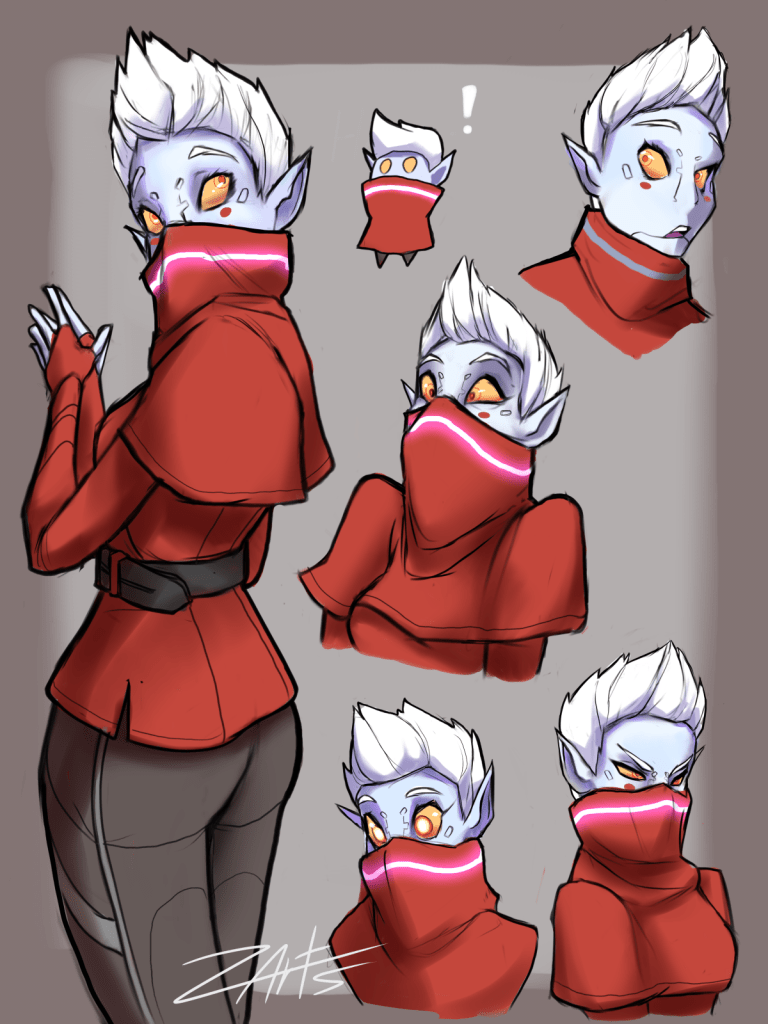
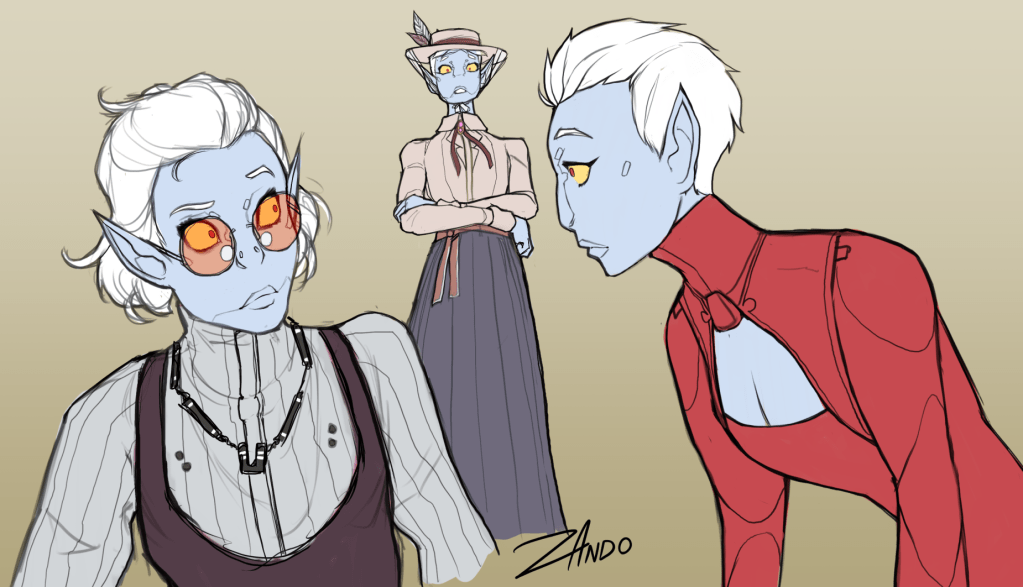
The 43rd of 74 transhuman subspecies recognized by the Tichordia Concord. These transhumans are best recognized by bluish skin pigment, reflective white hair and mustard biosynth corneas. The population is dispersed mostly in the Neptunian orbits and Trojans, Haumae, Pluto and a small community in the asteroid belt. As of 2370, the total population is estimated at 75,000, making Harpsai somewhat rare amongst the general populace.
Several hundred Harpsai had given birth prior to the Tichordia Concord, therefore the population is considered self sustaining. There are currently no labs producing Harpsai. As of 2373, just over one hundred subspecies members are born annually, though this number is expected to increase drastically when third generation Harpsai reach maturity in the 2380s.
While the Harpsai community is proud of their genetic heritage, they are not unified by governance or religion. Like all members of the Concord, they maintain a cultural embassy in the Kuiper Alliance.
Notable Individuals
Hedaldi Min – Hedaldi was the first person to perform an extravehicular excursion Cabal. She spent 10 hours on the surface, conducting a geological site survey.
Shiam Tikli – Shiam is a mindscape personality who obsessively reports on the movement of spacecraft around the solar system. Her data and reporting is often quoted on interplanetary news networks.
 Hibour