
Animals
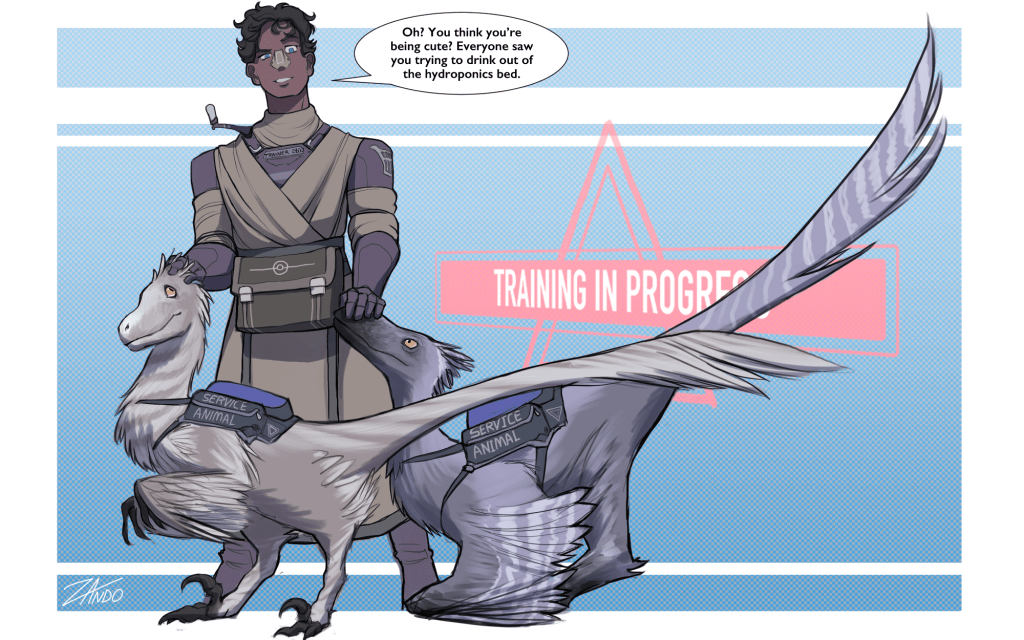
No mice yet in space
Spy the eerie calm of moon
Mice are in the walls

- Early Cislunar haiku. The poem describes chaos, but also eludes to early rodent populations on Luna.
History
It is known that various animals were brought to low Earth orbit in the twentieth century. Surviving film images depict dogs, non-human apes, small Earth birds and rodents, all serving scientific, engineering and presumably, early meat preparation.
The Legacy of Earth Fauna
It is estimated that 65% of Earth’s flora and fauna that began the anthropocene perished either directly or indirectly from human influence. Though the mass extinction event is often overshadowed by the Iceland Event, it is an important to understand that many species, such as rhinos, whales, tigers and many thousands of others were removed from the ecosystem centuries before the impact event. Nearly all the biodiversity of the rainforest and polar regions were extinguished. The insect kingdom was largely decimated by changing climate. Fish and crustacean populations were long ago overwhelmed by industrial harvesting, rising ocean temperatures, changing salinity levels and stagnant ocean currents. Ecological disaster, despite all efforts, was more or less complete by the twenty second century.
Even a healthy biosphere would have struggled to survive the interstellar impact that obliterated the North Atlantic. Earth’s ecosystems perished alongside humanity in 2181. Only those animals who were already off Earth stood any chance of avoiding extinction.
Today, apart from humans, there are very, very few true descendants of Earth. It is known that some fish stocks were already present in space during the cataclysm. Other species include domestic cats, rats and other rodents, and handful of insect species and parakeets. It is hypothesized that some small and medium dogs in Luna sphere may be descendants of dogs that travelled from Earth, but no definitive records exist on the matter.
Genetic Engineering
Engineering new organisms has been a lucrative business since the loss of Earth, though the most progress occurred in the middle 2200s. Generally speaking, if the structure of a creature, it’s biological processes and it’s behaviors were well enough understood, it could be replicated. However, the costs associated with genetic engineering usually meant that only the most popular and fascinating creatures were represented on the market. A tyrannosaurus, for example, has indeed been created (first in 2255), but outside of being an exotic pet for an absurdly wealthy individual, there was never a market for an adult tyrannosaur.
Paleofauna
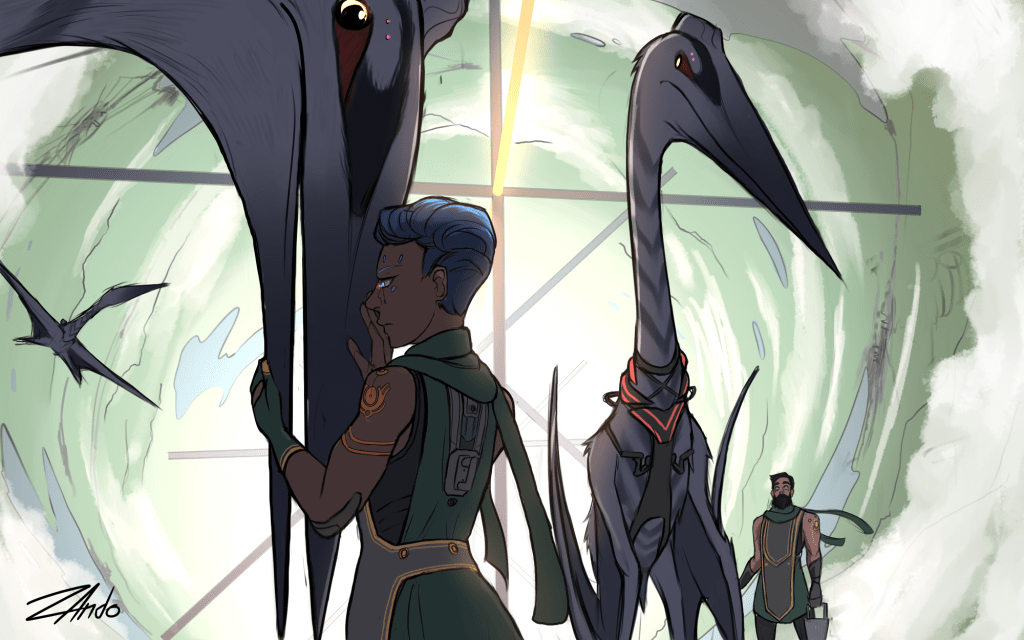
The dexterity of gene editing technology did not limit itself to modern Earth fauna. Paleofauna became a popular in the mid twenty-third century, as it really wasn’t any more difficult to design a stegosaurus than it was an elephant… provided there was enough fossil evidence and equitable biology to go on.
Sometimes called the paleo-integration, the commercial success of a few low-rate production pterosaurs in the 2230’s led to an explosion of paleofauna companies, all vying to outproduce or out design their competitors. Stakisaur Incorporated, based in the Uranian system, was one of the largest and most successful. At its peak in 2269, Stakisaur had a catalogue of 46 species.
The largest and arguably most complex paleo-organism ever produced was a brachiosaurus named Lilica. Lilica’s design pushed the limit of gene editing technology and cybernetics and she lived for 14 years before encountering severe development issues. She was humanely euthanized just days before the Tichordea Concord, which would outlaw projects of similar scale.
Today, the most common examples of paleofauna are pterosaurs, small to medium theropods, marine animals from the Ordovician onward and mammals from the paleogene onward.
Pets
The average modern human has microcomputers in their skull, their eyes and half a dozen other parts of the body. They live in habitats more or less tailored for their survival. They may be transhuman with significant biological deviation. None of these conditions have resolved the need for companionship, a need many fill with domesticated animals.
It is perfectly understood that humans have been domesticating animals for thousands of years. While it is not known when precisely some critters became members of the family, it is known that companimals ventured into space somewhat early. Historians and anthropologists struggle to determine the purpose of many animals in early spaceflight history. It is often assumed, therefore that they may have been crew companions.
Livestock
Livestock is primarily used for food production. Many of the old staples of Earth still exist today, though almost none are directly descended from their ancestors on Earth. Aside from the cultivation of meat, livestock exists for various manufacturing products, including oil, leathers, sheared materials and even bones and tissues.
 Hibour